When wolves come in sheep's clothing, they look like... sheep, harmless and fuzzy and worthy of protection. When Satan comes as an angel of light he looks like... an angel of light, full of glory and mouthing praise to God.
Hello? I'm stating the obvious, right? Then why is it so hard for us to accept that false teachers exist, that good-looking people can be evil, and that someone we have known as an angelic member of God's flock may actually be a demon-motivated wolf?
Of course there are valid psychological reasons why it is difficult and often even traumatic to allow ourselves to believe that someone we have trusted is actually unworthy of our trust. And yes, we most definitely should not label everyone who falls short of perfection a false prophet. We all need more mercy than we deserve.
But. Listen to Paul's words—spoken to church leaders, no less:
"I know that after my departure fierce wolves will come in among you, not sparing the flock; and from among your own selves will arise men speaking twisted things, to draw away the disciples after them. Therefore be alert..." (Acts 20:29-31, ESV, emphasis added)
What do these words mean? If Paul meant what he said (and he did), then surely his words mean that you and I should look around at the spiritual leaders in our lives—including those closest to us—and consider it not only possible but even probable or perhaps certain that some of these very spiritual people we currently trust will one day be exposed as frauds, as fierce wolves speaking twisted things.
Of course they don't look like wolves now. Because wolves come in sheep's clothing. That's what Jesus said:
“Beware of false prophets, who come to you in sheep's clothing but inwardly are ravenous wolves." (Matt. 7:15)
Wolves don't look like wolves and false prophets don't look like false prophets. That was Jesus' point.
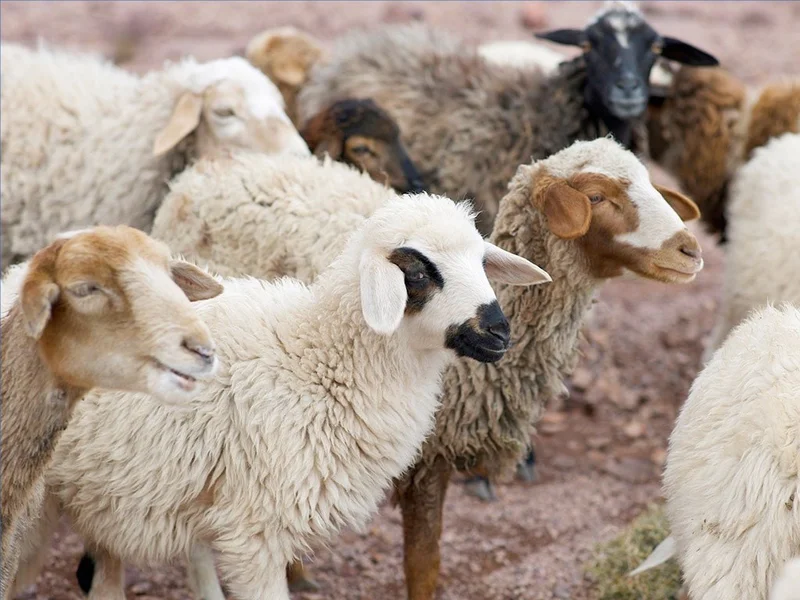
How, then, do we identify wolves?
"You will recognize them by their fruits," Jesus said (Matt. 7:16, 20). And he defined good fruit in the same passage (Matt. 7:15-27).
Crucially, good fruit is not doing all sorts of amazing spiritual activity like prophesying, casting out demons, or doing mighty works. Those are all either secondary matters or worse: wool to pull over the eyes of sleepy sheep. People keep falling for these charades again and again!
The only one who truly bears good fruit is "the one who does the will of my Father who is in heaven," which Jesus then defines as the one "who hears these words of mine and does them." In short, obeying Jesus is what matters.
Paul makes a similar point at the end of his warning about Satan posing as an angel of light:
"Such men are false apostles, deceitful workmen, disguising themselves as apostles of Christ. And no wonder, for even Satan disguises himself as an angel of light. So it is no surprise if his servants, also, disguise themselves as servants of righteousness. Their end will correspond to their deeds." (2 Cor. 11:13-14)
"Their end will correspond to their deeds."
Yes, sometimes it takes a long time to know whether someone is truly obedient to Jesus. Some people manage a very convincing spiritual charade for a very long time. Paul's words are relevant here:
"Do not admit a charge against an elder except on the evidence of two or three witnesses. As for those who persist in sin, rebuke them in the presence of all, so that the rest may stand in fear. In the presence of God and of Christ Jesus and of the elect angels I charge you to keep these rules without prejudging, doing nothing from partiality. Do not be hasty in the laying on of hands, nor take part in the sins of others; keep yourself pure... The sins of some people are conspicuous, going before them to judgment, but the sins of others appear later. So also good works are conspicuous, and even those that are not cannot remain hidden." (1 Tim. 5:19-25)
No, we should not admit charges willy-nilly against spiritual leaders. But notice also what Paul doesn't say: "Don't admit a charge unless you have at least twenty or thirty witnesses." No: two or three solid witnesses are enough. If that's what you have, then it's time to proceed with the trial. Don't sit around waiting for more witnesses!
I know, it's extremely hard to admit that someone you have trusted is a fraud. But if you demand more and more witnesses before you are willing to seriously consider the evidence, it's very likely you'll end up defending false prophets—prophets who will then devour God's flock because you lacked alertness or courage to stop them.
Yes, if the evidence is not substantial or clear, then do be slow to act--slow to either judge or bless the character or ministry of another. In God's time, both sins and good works (obedience to Jesus, remember) will be exposed before all. Sometimes we have to wait a very long time before this exposure happens. If this is your situation, then wait. Be slow to "pass judgment on the servant of another" (Rom. 14:4). Sit on the limited knowledge you have, but with eyes wide open.
But if credible evidence of flagrant disobedience to Jesus' words appears—again, two or three solid witnesses, not twenty or thirty—then get on with the trial! (A trial, mind you, not a lynching.) And, if the evidence proves solid, "rebuke them in the presence of all."
Yes, even online.
What counts as credible evidence? We could write books to answer that question well, but what strikes me in reading both the Old and New Testaments is that the sort of evidence that counts in a properly-conducted trial among God's people is much the same as in any civil court: eye-witness testimony and documentary physical evidence of actions, good or bad. When Jesus said "you will recognize them by their fruits," I don't think he was saying "you will discern whether someone is a false prophet by a secret revelation from me in your spirit." Yes, this recorded as happening sometimes in the NT, but the normal, expected pattern seems to be good old-fashioned eye-witness testimony and tangible evidence. These should never be pushed aside because someone claims special spiritual insight into a situation.
But I would never mistake a wolf for a sheep!
Consider your own experience: How many people (church leaders, authors, mentors, etc.) that you have trusted in the past have profoundly let you down? How many have fallen into public shame for their hidden sins? Most of us could quickly compile at least a short list of significant examples.
Yes, it happens. To all of us. People we thought were sheep turn out to be wolves. (Don't let shame over being duped stop you from getting on with your walk with the Lord.)
Now take a look around you right now. Make a mental list of the spiritual leaders you currently trust—including the ones who look extra angelic and sheepish (okay, we need a new word). Unless that list is exceedingly short indeed, then probably at least one of those leaders will someday prove to be a spiritual fraud, perhaps even a predatory, demon-controlled wolf.
Oh, but they are so sincere! And they have such good intentions! And it's obvious they love God so much! They spend so much time in prayer, in the word, in caring for the many people who have been blessed by their ministry!
Let me go out on a limb here: I think it's very possible that some false prophets—perhaps many or even most—have no idea that they are false prophets. They themselves, in their own heart of hearts, think that they are sheep, even full of light. After all, they have been doing so much for God!
Consider Jesus' warning: "Indeed, the hour is coming when whoever kills you will think he is offering service to God" (John 16:2). If even people who are physically killing Christians can think they are doing God's will, then why wouldn't false prophets be equally convinced they are serving God?
And listen again to Jesus' warning: "On that day many will say to me, ‘Lord, Lord, did we not prophesy in your name, and cast out demons in your name, and do many mighty works in your name?’" (Matt. 7:22). Did they even know they were wolves?
Oh, but I have experienced them to be wonderful, devoted Christians! Well, according to Paul, your experience isn't all that matters. What about those two or three witnesses that have the receipts showing something different?
Again: When wolves come in sheep's clothing, they look like... sheep. When Satan comes as an angel of light he looks like... an angel of light. When false prophets appear, they "disguise themselves as servants of righteousness." It's so very clear, and yet so very hard to acknowledge: We are easily fooled.
You will recognize them by their fruits. Do they obey Jesus? If there are even a handful of solid witnesses that clearly testify otherwise, then pull the wool out of your eyes, call the sheep together, and start honestly examining the evidence. Then take action accordingly—and decisively! The safety of the blood-bought flock of Christ may depend on your response.
Comments
Your comment has been submitted.